Chronologo
time and budget tracker
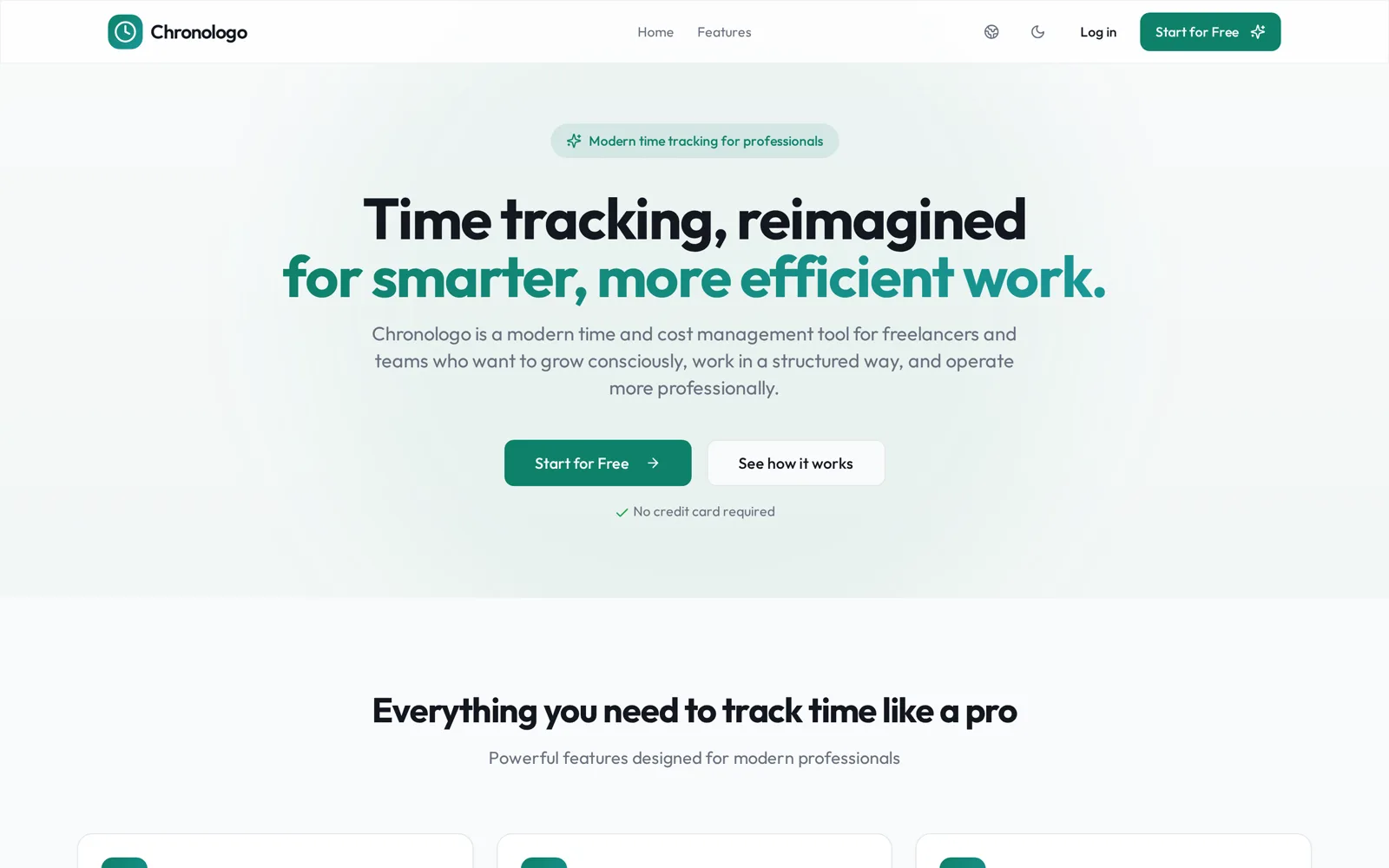
A realtime cross-platform time and budget tracker built to solve my own studio problem, deliberately never distributed.
Why I built it
Freelance work goes wrong in the same place every time: you do not actually know what a project cost you until it is finished. Hours drift, expenses get logged late, and the profitable clients look identical to the unprofitable ones until the year is over.
Chronologo is my answer to that. It tracks time and costs together, in realtime, across desktop and mobile, structured by project, so the picture is current rather than reconstructed afterwards.
What it does
- Realtime time tracking with pause handling and timestamped descriptions, so a log tells you what happened, not only how long it took.
- Expenses tracked per project, with attachments and units, alongside the hours.
- Projects, tags and archiving, so long-running client relationships stay readable.
- Dashboard statistics that answer the only question that matters: is this project worth it.
- Exports for time logs, expenses and whole projects.
- Cross-platform, with a mobile layout built as a first-class surface rather than a shrunken desktop view.
Design decisions
The hard part of a tracker is not the timer. It is making logging cheap enough that you actually do it, every day, without friction. Every interaction was designed against that single test: how many taps between remembering and having it recorded.
Roles, per-user data isolation and settings were built in from the start, because a tool that handles billing data should not treat access as an afterthought even when the only user is me.
Why it stayed internal
I never distributed it. A realtime, cross-platform, always-on product carries permanent running costs, and supporting other people's billing data carries permanent responsibility. I chose not to take either on for a tool I built to solve my own problem.
That decision is part of the product thinking, not a failure of it. Knowing when not to ship is as useful as knowing how to.